
A bed can feel solid in a showroom yet loosen after one Islamabad summer. A wardrobe that closes cleanly in May may bind in August because its timber, panels or edge details were not prepared for the change in humidity.
For most buyers seeking the best wood for furniture in Pakistan, properly seasoned sheesham is the safest all-round solid-timber choice for beds, tables and other hard-working pieces. It is not the automatic answer for every panel, cabinet or budget: good plywood can be more stable for large carcasses, while MDF has a useful but narrower role in dry, painted interiors.
This guide compares timber and boards by room, load, moisture risk, repairability and the seasonal conditions of Islamabad and Rawalpindi.
Quick answer
Properly seasoned sheesham is the strongest all-round solid-wood choice for heavily used beds, dining tables and living-room furniture in Pakistan. Plywood, MDF and other boards can be more practical for selected interior panels and storage, but the right choice depends on load, moisture exposure, joinery, edge sealing and seasonal movement.
Key takeaways
- Seasoned sheesham is a dependable choice for load-bearing furniture, but no timber is best for every room.
- Furniture-grade plywood generally holds screws and tolerates structural use better than MDF or particle board.
- Ordinary MDF and particle board can swell permanently when water enters an exposed edge.
- No wood should be sold as termite-proof; moisture control, detailing, treatment and inspection all affect risk.
- Islamabad’s dry early summer can open joints, while monsoon humidity can make solid-wood doors and drawers bind.
📋 Table of Contents
- What is the best wood for furniture in Pakistan?
- Which material suits each room and furniture type?
- Which boards work in kitchens, bathrooms and utility areas?
- What should you use for study desks and computer tables?
- How do sheesham, deodar, teak, kail and other timbers compare?
- MDF vs solid wood furniture: when should you choose plywood, blockboard or particle board?
- How does Islamabad’s climate affect wood and finishes?
- What should you inspect before buying wood furniture in Pakistan?
- Common material-selection mistakes
- How should budget affect the material decision?
- Use this checklist before approving the order
- Frequently Asked Questions
- Talk to WoodReno About Your Project
What is the best wood for furniture in Pakistan?
Choose seasoned sheesham if you want a durable solid-wood bed, dining table, cabinet or visible living-room piece that can be repaired and refinished. Choose furniture-grade plywood for stable cabinet carcasses and broad panels. Use MDF mainly where a smooth painted face or routed detail matters and water exposure is unlikely.
No species name compensates for wet timber, poor joints or a weak finish. Green or inadequately acclimatised wood can shrink, twist and split after manufacture, opening mitres and exposing pale lines beside joints. Boards also vary greatly: core quality, density, edge sealing and fasteners matter as much as the label.
⚠️ Important
No furniture wood is termite-proof. Species affects natural durability, but termites also exploit damp walls, concealed contact with floors, untreated sapwood and unsealed construction gaps.
Furniture materials in Pakistan compared by room, moisture risk and budget
| Material | Best uses | Moisture behaviour | Strength and durability | Buying check |
|---|---|---|---|---|
| Seasoned sheesham | Beds, tables, seating frames | Moves seasonally; needs sound drying | Dense, strong and repairable | Check joints, end cracks and moisture history |
| Deodar | Cabinets and lighter traditional furniture | Can distort if poorly dried | Lighter and softer than sheesham | Confirm grade and load-bearing dimensions |
| Kail/pine | Budget frames, shelves and painted pieces | Moves with humidity | Light; dents readily | Look for loose knots and crushed edges |
| Teak | Premium furniture and demanding exposure | Good dimensional and moisture performance | Durable when genuine and well selected | Verify species and actual solid parts |
| Oak or walnut | Premium feature furniture | Stable only when correctly dried | Strong, repairable solid timber | Distinguish timber from veneer or colour |
| Furniture-grade plywood | Wardrobes, kitchens, desk and cabinet panels | Stable, but edges still need protection | Good screw holding with a sound core | Inspect plies, voids, face and exposed edges |
| MDF | Painted shutters and dry-room panels | Swells badly if water reaches the core | Uniform face; modest edge holding | Check density, fasteners and edge sealing |
| Blockboard | Wide shutters and light interior panels | Quality determines warping resistance | Relatively light with useful screw holding | Check flatness and internal construction |
| Particle board | Low-load, dry, economical furniture | Highly vulnerable at wet edges | Weak under repeated fastening | Inspect edge banding and connector damage |
Which material suits each room and furniture type?
The material should follow the failure risk. Beds need rigid frames and dependable joints; wardrobes need flat panels; dining tables face heat and spills; kitchens face leaks; desks need resistance to sagging across long spans.

Beds, wardrobes and bedroom storage
The best wood for beds in Pakistan is usually seasoned sheesham when long service life and repairability matter. Side rails, legs, headboard posts and the central mattress support carry repeated loads, so joint design and rail thickness matter more than decorative weight.
A wardrobe does not need solid timber throughout. A plywood carcass with a properly detailed timber or veneered front can remain flatter than broad solid planks. MDF may suit painted shutters in a dry bedroom, but floor-level edges should be protected from mopping water and damp external walls.
Dining tables and living-room furniture
Dense, seasoned timber works well for dining-table frames and exposed edges. A veneered plywood top can also be rational because it gives a stable broad surface, provided the edge construction and finish withstand spills and repeated wiping.
Solid timber is preferable for load-bearing sofa and chair frames. For coffee tables, consoles and TV units, mixed construction can place timber at legs and exposed edges while using plywood for large panels. Readers choosing the look as well as the structure can review these modern wood furniture design ideas for Pakistani homes.
Which boards work in kitchens, bathrooms and utility areas?
Kitchen carcasses, shutters and sink-adjacent panels face different risks. Furniture-grade plywood is commonly the more forgiving cabinet substrate where screws, loaded shelves and occasional moisture are expected. It is still not waterproof: unsealed cut-outs and damaged edges can admit water and separate veneers.
Ordinary MDF produces smooth painted shutters, but it is a poor choice beside a recurring sink leak or on an exposed floor edge. Particle board is still less forgiving. Once either develops a raised, crumbly edge, drying will not restore its original thickness.
Bathrooms, balconies and damp utility zones need exposure-specific materials and detailing rather than a generic “waterproof board” promise. Ventilation, raised plinths, sealed edges and access for plumbing repairs often determine service life. See the detailed kitchen cabinet material comparison for a closer look at cabinet zones.
What should you use for study desks and computer tables?
A desk top can bow even when its surface looks thick. Wide unsupported spans need a rigid substrate, adequate thickness, a front rail or another form of support. Thin, low-density particle board is particularly prone to sagging under monitors, books and leaning loads.
Plywood normally offers better screw holding for drawer runners, modesty panels and legs. MDF provides a smooth painted top but needs suitable fasteners and well-supported edges. A desk that will be dismantled repeatedly should not rely on screws driven directly into weak board edges.
Plan cable cut-outs before finishing so the exposed core can be sealed. The study-table material and sizing guide explains how span, storage and material selection affect a desk specification.
How do sheesham, deodar, teak, kail and other timbers compare?
Sheesham is dense, prominent-grained and well suited to beds, tables and cabinets that take daily knocks. Its weight is not proof of quality, however. Poorly dried sheesham can check at the ends, twist across broad components or open at joints after it reaches a drier room.
Sheesham or deodar for daily use
Deodar is generally lighter and softer in character than sheesham. It can suit cabinets, decorative work and furniture where lower weight is useful, but it is not automatically better because of its name or traditional reputation. For a heavily loaded bed or dining frame, well-seasoned sheesham is usually the stronger default.
Premium and imported timbers
Teak has a strong reputation for durability and moisture tolerance, but buyers should verify what is actually being supplied. Oak and walnut are often premium or imported choices, so availability and cost can shift with exchange rates and import cycles. An “oak finish” may mean only a stain, printed laminate or thin veneer.
Budget woods and local hardwoods
Kail and other pines are lighter, easier to dent and often used in budget-led or painted furniture. Kikar and other local hardwoods may be strong, but dryness, grain direction, machining and supplier transparency decide whether a particular batch is suitable.
Ask sellers to replace vague terms such as “rosewood,” “walnut colour” and “solid wood” with a component-by-component description. A solid frame with veneered panels may be perfectly sound; the problem is an unclear label, not mixed construction.
MDF vs solid wood furniture: when should you choose plywood, blockboard or particle board?
Solid wood is preferable where loads, exposed edges and future repair matter. Plywood is often the better engineered board for structural panels and cabinet carcasses. MDF earns its place on smooth painted faces, while particle board belongs mainly in dry, low-load furniture with limited expectations for repeated assembly.
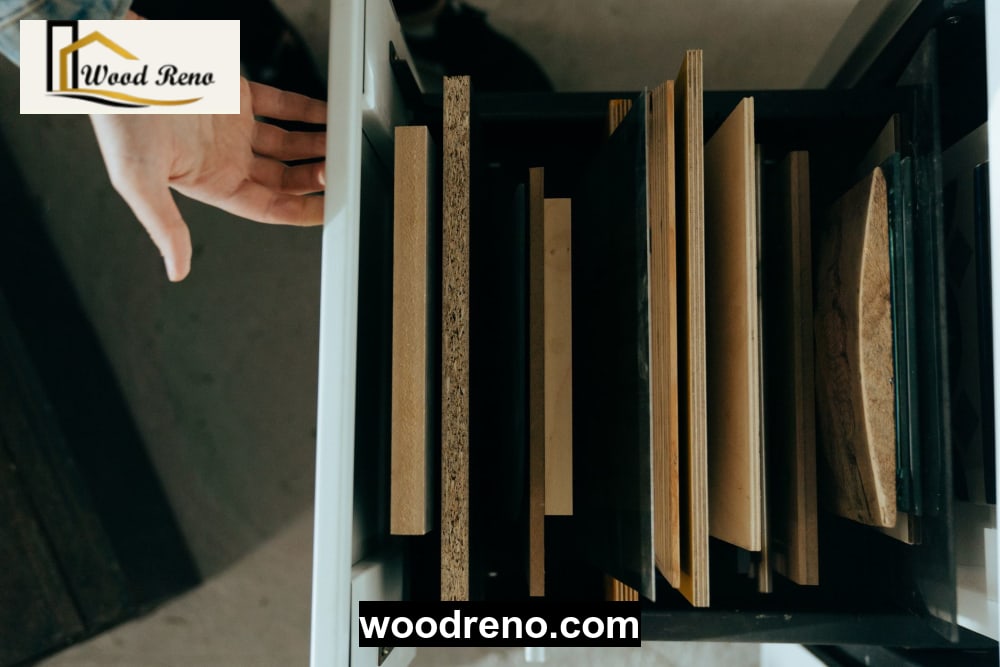
What each board does well
- MDF: A flat, uniform face for paint and routed profiles, without visible grain.
- Plywood: Layered construction, useful stability and better screw holding when the core is sound.
- Blockboard: Relatively light broad panels and shutters, provided the core is straight and evenly made.
- Particle board: Economical flat panels for lightly used, dry furniture.
Where boards commonly fail
MDF failures begin at exposed edges, hinge screws and wet cut-outs. Plywood can contain internal voids or delaminate after prolonged water entry. Blockboard shutters may warp if the core strips or face construction are poor, while particle board often crumbles around repeatedly tightened connectors.
Veneer, laminate and paint describe the surface, not the substrate. A walnut veneer can cover plywood or MDF; an oak-look laminate may cover particle board. Ask to see an unfinished edge, hardware hole or written construction schedule before deciding what you are buying.
💡 Tip
A sensible mixed build may use solid timber for legs, rails and repairable edges, plywood for stable carcasses, and veneer or paint for the required appearance.
How does Islamabad’s climate affect wood and finishes?
During the hot, dry May–June period, workshop temperatures can reach 38–42°C. Timber loses moisture and shrinks, so panel gaps and pale joint lines may appear. Water-based coatings can flash off too quickly, while PVA glue can skin before a wide joint is assembled and clamped.
July and August often bring humidity above 70%. Timber absorbs moisture and expands, which can make close-fitting drawers, doors and solid table panels bind. Paint and polish cure more slowly, and unsuitable application conditions can produce a cloudy or hazy finish.
Cold, damp winter nights can also slow oil-based finishes. A surface that feels dry may still be soft underneath, so cure guidance should come from the coating manufacturer’s current technical data rather than a universal timetable.
What workshop preparation should account for
Timber and boards should acclimatise near the installation conditions before final fitting. Wide solid-wood panels need construction that permits seasonal movement rather than screws or glue locking every edge in place.
Construction dust is another practical issue across the twin cities. Final sanding, vacuuming, surface cleaning and coating should happen in a controlled area; dust trapped in a wet coat leaves nibs that cannot be polished away without further levelling and recoating.
What should you inspect before buying wood furniture in Pakistan?
Start with a written breakdown: frame, legs, top, shutters, shelves, drawer boxes, backs and decorative surfaces. “Solid wood furniture” is not specific enough if only the front frame is timber and every broad panel is board.

Questions to ask the seller or carpenter
- Which components are solid timber, plywood, MDF, blockboard or particle board?
- How was the timber dried and allowed to acclimatise before machining?
- How are sink cut-outs, floor edges and board cores sealed?
- What treatment or detailing is specified for termite risk?
- Can hinges, runners and damaged surfaces be repaired or replaced later?
Red flags in solid-wood furniture
Fresh end checks, twisted shutters, uneven door gaps and joints already showing pale lines suggest movement or poor assembly. Drawers should run without being excessively loose. Inspect the underside as carefully as the polished face, including rail joints, centre supports and unfinished end grain.
You cannot prove seasoning by colour, smell or weight. A moisture meter reading is more useful when taken at several points and interpreted against the intended room, timber species and recent storage conditions; there is no single correct percentage for every workshop and installation.
Red flags in board furniture
Look for swollen floor edges, chipped laminate, loose edge banding and raised material around hinge screws. Check back panels and drawer bottoms: very thin panels can rack or pull out even when the main carcass looks substantial.
Common material-selection mistakes
- Buying by species name alone: Poorly dried premium timber can perform worse than correctly specified plywood. Compare construction, drying and joinery.
- Assuming heavy means strong: Weight may come from thick low-density board or decorative bulk. Inspect load paths and joints instead.
- Calling every board waterproof: Water entering a cut edge can cause permanent swelling. Specify edge treatment and leak access.
- Confusing finish with material: “Oak finish” and “walnut colour” say nothing about the core. Request the substrate in writing.
- Ignoring hardware: A sound carcass still performs badly with poorly fixed hinges or light runners. Match hardware and fasteners to the substrate.
- Locking broad timber panels: Rigid fastening across the grain can cause splitting or buckling. Allow seasonal movement.
- Expecting a species to stop termites: Keep furniture away from persistent damp and concealed soil contact, and include inspection and treatment where specified.
How should budget affect the material decision?
Spend first on the load-bearing frame, moisture-prone details, reliable hardware and finish preparation. Decorative carving, premium veneer and imported species matter less if a bed lacks centre support or a sink cabinet has unsealed cut-outs.
Good, better and best specifications
| Budget approach | Practical construction | Best fit | Where not to economise |
|---|---|---|---|
| Economical | Board furniture with simple finishes | Dry, low-load storage | Edges, connectors and shelf support |
| Mid-range | Plywood carcass with timber or veneered fronts | Wardrobes, desks and cabinets | Core quality, hardware and wet zones |
| Premium | Seasoned solid timber or high-grade mixed build | Beds, tables and repairable feature pieces | Seasoning, joinery and finish preparation |
Solid timber is worth paying for where exposed edges take knocks, structural joints carry repeated loads and future refinishing is likely. Stable panels are more sensible for broad cabinet sides, backs and some doors. The custom versus ready-made furniture comparison can help you decide how much specification control you need.
For Islamabad projects, WoodReno can prepare project-specific material selection and a quotation after measurement through its custom furniture options in Islamabad. Materials and hardware should be recorded in the approved specification rather than assumed from a showroom sample.
Use this checklist before approving the order
Before requesting quotations
- List each room, expected load and likely water exposure.
- Decide where solid timber adds repairability or visible character.
- Mark wide shelves, desk spans and heavy appliances that need support.
Before approving the specification
- Record the species or board type for every main component.
- Separate the substrate from the veneer, laminate, paint or polish.
- Specify exposed-edge sealing, hardware attachment and termite measures.
- Compare quotations line by line rather than comparing timber names alone.
At inspection or handover
- Open every drawer and door; check gaps from top to bottom.
- Inspect backs, undersides, drawer bottoms and floor-level edges.
- Look for end cracks, warping, swelling, loose banding and chipped cores.
- Confirm that installed furniture is level and not forced against damp walls.
- Keep the written material and finish specification for future repairs.
Frequently Asked Questions
What is the best quality wood for furniture in Pakistan?
Properly seasoned sheesham is the strongest all-round choice for durable beds, dining tables and living-room furniture. Teak, oak and walnut can suit premium work, while plywood may be better for broad cabinet panels. Drying, grade, joinery and finish quality matter as much as the species.
What is the best type of wood for a bed in Pakistan?
Seasoned sheesham is usually the best practical solid wood for a long-lived bed because it is dense, strong and repairable. Check the side-rail joints, centre support and slat arrangement as well as the timber. A plywood-panel headboard can be sensible if the structural frame is sound.
Which wood is most expensive in Pakistan?
There is no permanent price ranking because imported timber costs move with exchange rates, grade and availability. Verified teak, walnut and selected imported oak are often premium choices. Highly figured stock, thick clear boards and properly seasoned large sections can cost more than ordinary material of the same species.
What are the top five strongest woods for furniture?
For furniture commonly discussed in Pakistan, sheesham, oak, teak, kikar and walnut can all provide strong components when correctly graded and dried. A universal top-five ranking is misleading because strength changes by species, grain direction, defects and load type. Joint design often determines whether the finished piece remains rigid.
Is sheesham better than MDF for furniture?
Sheesham is better for load-bearing frames, exposed edges, repairable furniture and pieces expected to last through repeated use. MDF is useful for smooth painted panels and routed details in dry rooms. It is not a direct substitute for a solid-timber bed rail, chair frame or wet-area cabinet component.
Which wood is best for termite-resistant furniture in Pakistan?
No wood should be treated as termite-proof. Some durable heartwoods may resist attack better than vulnerable sapwood, but moisture, concealed access, construction detailing and treatment also control risk. Keep furniture away from persistent damp, inspect hidden surfaces and require any prevention measures to be written into the specification.
Talk to WoodReno About Your Project
Every project is quoted after measurement, so the figures above are general market guidance rather than a WoodReno price. Send your measurements and photographs and the team will come back with a project-specific quotation.
Shop #1, Plot #126, I&T Center, G-9/1, Islamabad 44002 · +92 334 9000098
Sources
Reviewed by Safdar Aslam for WoodReno.