
A dining table can feel dry in the evening yet take a cup ring the next morning. A cabinet door can look finished but stick to its frame after being closed overnight. The important question is not only how long does furniture polish take to dry, but which finish was used and what you intend to do next.
Wax is commonly ready to buff after 15–30 minutes. Lacquer may become touch-dry in 10–30 minutes, while melamine and polyurethane finishes can feel dry within hours but require several days to develop useful hardness. Islamabad’s summer heat, monsoon humidity and cold winter nights can shift each stage.
Quick answer
Furniture polish may feel dry in 15 minutes to several hours, but touch-dry does not mean fully cured. Wax is usually buffed after 15–30 minutes, lacquer may be recoated after 30–60 minutes, and melamine or two-component PU generally needs several days to develop useful hardness.
Key takeaways
- Wax normally hazes for 15–30 minutes before buffing; a thick coat remains smeary rather than becoming more protective.
- Typical melamine and two-component PU systems need roughly five to seven days to develop useful hardness, even if they feel dry within hours.
- Monsoon humidity can prolong tackiness and cause lacquer bloom, while extreme summer heat can make a coating flash off too quickly.
- Do not cover, load or tightly reassemble furniture merely because its surface feels dry.
📋 Table of Contents
- How long does furniture polish take to dry on wood?
- What do touch-dry, recoat time and full cure mean?
- Drying and cure times by furniture finish
- How do Islamabad’s seasons change drying time?
- When is it safe to buff, recoat, move and use furniture?
- Why is furniture polish sticky, cloudy or rough?
- Common mistakes that delay or damage the finish
- How can you make furniture polish dry properly?
- Related reading
- Frequently Asked Questions
- Talk to WoodReno About Your Project
How long does furniture polish take to dry on wood?
Use these steps as a practical sequence rather than treating one dry-time figure as permission for every action:
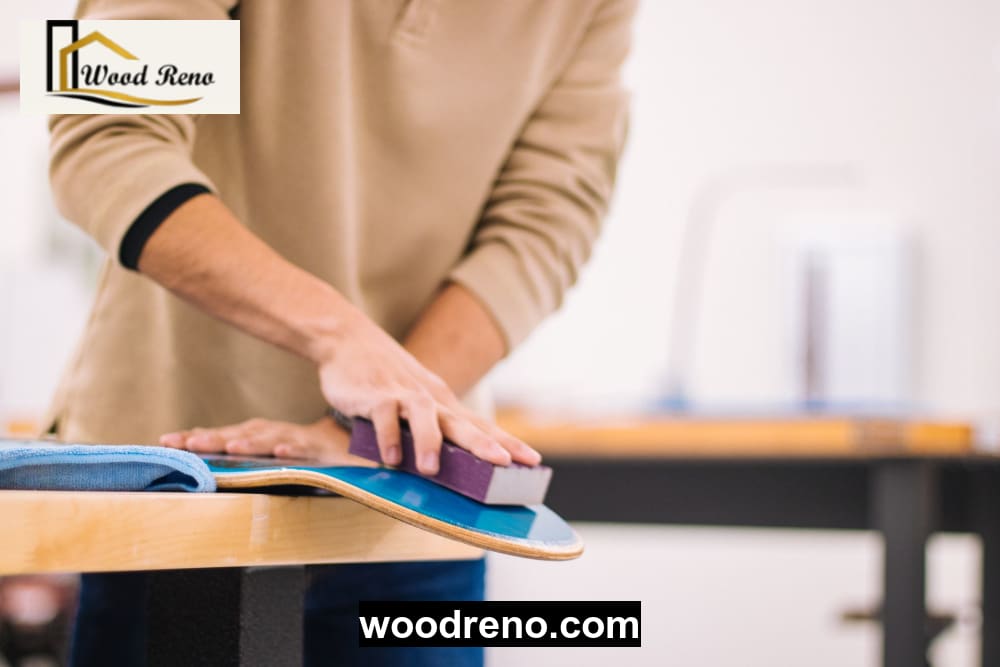
- Identify the product. “Polish” may mean wax, oil, melamine, PU or lacquer.
- Wait for touch-dry. This can take 10 minutes for lacquer or several hours for reactive coatings.
- Buff wax after it hazes. A thin wax coat usually needs 15–30 minutes.
- Observe the stated recoat window. Do not apply another coat simply because the surface looks dry.
- Handle gently after the specified interval. Touch-dry furniture can still dent, print or stick.
- Delay normal use until useful cure. Melamine and two-component PU commonly need about five to seven days under suitable conditions.
If the surface smells strongly of solvent, feels cool or tacky, or retains a light fingerprint, it is not ready for normal use even if it looks dry.
Why the label is the final authority
These are planning ranges for thin, correctly prepared coats indoors at roughly 20–25°C and moderate humidity. Product chemistry, coat thickness, catalyst ratio, thinner, ventilation and the existing coating can all alter the result.
Read the label and technical data sheet before mixing or recoating. A timing printed for one-pack PU cannot safely be transferred to two-component PU, and a lacquer recoat schedule does not apply to oil.
What do touch-dry, recoat time and full cure mean?
Touch-dry means a light touch leaves no wet material on your finger. It does not mean you can stack parts, close drawers, replace tight hardware or leave objects on the surface.
Recoat time is the interval specified for applying the next compatible coat. Recoating too soon can trap solvent and leave a soft film. Waiting beyond the stated window may mean sanding is required for adhesion.
Full cure is when the finish has developed its intended hardness and resistance. Two-component PU hardens through a chemical reaction, oil cures largely through oxidation, and lacquer chiefly dries through solvent release. Wax normally hazes and is buffed rather than curing into a hard film.
Why a dry surface can still dent or print
Evaporation starts at the exposed surface, so the top can appear dry while the layer beneath remains soft. Plastic covers, rubber feet, stacked panels and heavy ornaments then press a visible pattern into the finish.
Check in stages: first look for an even haze or absence of wet sheen, then make a light fingertip test in an inconspicuous place. Move to gentle handling only after the relevant handling interval, and to demanding use after the stated cure period.
Drying and cure times by furniture finish
The table gives typical indoor planning ranges, not guaranteed completion times. Existing coatings, repairability, expected wear and manufacturer compatibility should determine the finish system—not speed alone.
Typical drying, recoating and cure times
| Finish type | Touch-dry or ready to buff | Typical recoat time | Careful handling and full cure | Failure if rushed |
|---|---|---|---|---|
| Wax or beeswax polish; non-hard film | Buff after 15–30 minutes, once hazed | Follow label if adding another thin coat | Gentle use after thorough buffing; no hard chemical cure | Smears, fingerprints and trapped dust |
| Oil or oil-wax; oxidation-cured finish | Product-specific; often overnight or longer | Use the stated interval | Days to weeks before demanding use | Wrinkling, tackiness or a marked surface |
| Catalysed melamine finish | About 1–3 hours | About 4–8 hours | Careful handling as directed; about 5–7 days for useful cure | Softness, trapped solvent or poor adhesion |
| Two-component PU finish | About 2–6 hours | About 8–24 hours | About 5–7 days for useful full cure | Print marks, soft film or intercoat failure |
| Nitrocellulose or similar solvent lacquer | About 10–30 minutes | About 30–60 minutes | Handle carefully; allow several days before full-service use | Blushing, solvent trapping or impressions |
Wax, beeswax and oil finishes
For beeswax furniture polish, apply a very thin, even film with the applicator stated by the maker. Leave it until a light haze forms, commonly 15–30 minutes, then buff with a clean cloth. Excess wax stays greasy and attracts dust; more wax does not create a harder coating.
Oil and oil-wax products are different. They may be dry to touch after an overnight wait but remain vulnerable while oxidation continues. Do not cover an oiled table or place heavy objects on it until the manufacturer’s cure period has passed.
Melamine, PU and lacquer
Locally, melamine polish usually means a catalysed, film-forming furniture finish rather than a cleaning polish. A practical melamine polish drying time is 1–3 hours to touch, 4–8 hours before recoating and around 5–7 days for useful cure, subject to the exact catalyst and thinner instructions.
PU polish curing time depends heavily on whether the material is one-pack or two-pack. A typical two-component system may need 2–6 hours to become touch-dry, 8–24 hours before recoating and about 5–7 days to harden. One-pack products vary too widely to use the same schedule.
Lacquer releases solvent quickly, so lacquer drying time is often 10–30 minutes to touch and 30–60 minutes before another coat. Heavy coats or rapid recoating can trap solvent below the surface. High humidity can also turn the film milky or cloudy.
How do Islamabad’s seasons change drying time?
Judge conditions in the room where the furniture is curing, not from the outdoor forecast alone. An air-conditioned room, a damp ground-floor room and a hot enclosed workshop can behave very differently on the same day.

Seasonal adjustments for the twin cities
| Condition | What changes | Practical response | Typical warning sign |
|---|---|---|---|
| May–June, 38–42°C and dry | Water and fast solvents flash off quickly | Work indoors, in shade, within the product’s temperature range | Lap marks, poor flow or dry spray |
| July–August, often above 70% humidity | Evaporation slows and moisture can affect lacquer | Allow extra time and postpone work in visibly damp conditions | Tackiness, bloom or a milky film |
| December–February cold nights | Oil oxidation and reactive curing slow down | Maintain the stated minimum temperature and extend handling time | Persistent odour or softness the next day |
| Nearby construction or sanding | Airborne grit settles into wet coating | Use clean airflow away from open windows and active work | Rough dust nibs across horizontal surfaces |
Fast flash-off is not full cure
In May and June, a coating can skin over before it flows level. Applying in direct sun or adding unapproved thinner may worsen the problem. Use thin coats and stay within the manufacturer’s application range.
During the monsoon, closed rooms can retain moisture and solvent, but a fan aimed at the work may drive dust into it. Provide clean, indirect ventilation and extend the waiting period if the coating remains cool, odorous or tacky.
Monsoon swelling can also make doors and drawers bind. That is timber movement, not necessarily an uncured finish. Guidance on repairing swollen wood furniture explains how to distinguish the two problems.
When is it safe to buff, recoat, move and use furniture?
Buff wax only after an even haze appears. Recoat film finishes only within the manufacturer’s interval, including any sanding requirement. Do not use a dry fingertip test as permission to add another coat.
Safe-use checklist after the final coat
- Keep cabinet doors and drawers slightly open until they are beyond touch-dry.
- Delay handles, hinges and tight-fitting hardware if installation will press into the coating.
- Lift furniture rather than dragging it; use clean, soft supports if movement is unavoidable.
- Keep tablecloths, plastic covers, rubber pads, hot cups and cleaning chemicals off the finish during early cure.
- Reserve dining tables, desktops and frequently handled doors for normal use only after the stated cure period.
Gentle handling means moving a piece carefully without loading or rubbing the surface. Normal use includes repeated touching, cups, plates and drawer movement. High-abuse use includes hot serving dishes, water exposure and heavy decorative items.
If an older coating is peeling, deeply scratched or chemically incompatible, maintenance polish will not correct it. That situation may call for professional furniture polishing in Islamabad rather than another surface coat.
Why is furniture polish sticky, cloudy or rough?
Tacky polish
A finish that is still sticky after a day may have been applied too thickly, recoated early or mixed with the wrong catalyst or thinner ratio. Low temperature, monsoon humidity, poor ventilation and an incompatible old coating are other common causes.
Stop using the piece and consult the technical instructions before adding material. Another coat often seals in the problem rather than correcting it.
White haze or bloom
A milky cast in fresh lacquer is often humidity-related blushing or blooming: moisture becomes trapped as solvent leaves the film. This differs from a white cup mark in an old finish or moisture damage within the timber.
Do not keep recoating widespread cloudiness. The remedy depends on the lacquer system and may require controlled correction or removal.
Dust nibs and roughness
Islamabad–Rawalpindi construction dust readily settles on horizontal surfaces. Keep wet work away from open windows, masonry cutting and active sanding, while retaining the safe ventilation required by the product.
Do not rub or sand a soft finish. Wait until the technical instructions permit abrasion; otherwise the coating may ball up, smear or tear.
Common mistakes that delay or damage the finish
- Applying a heavy coat: the surface skins over while solvent or oil remains beneath it. Apply thin, even coats instead.
- Guessing the catalyst ratio: too much or too little hardener can affect pot life, adhesion and cure. Measure exactly as the data sheet states.
- Recoating by appearance alone: a glossy, dry-looking surface may still be soft. Use the specified interval.
- Closing drawers overnight: opposing surfaces can stick together or develop pressure marks. Leave them open until safe to handle.
- Using direct heat: heaters and direct sun can cause rapid skinning and may create a fire risk around solvent vapour. Maintain stable, permitted room conditions.
- Adding wax over contamination: silicone-rich cleaner, grease or loose old finish can cause smears and adhesion trouble. Clean and prepare for the chosen system first.
How can you make furniture polish dry properly?
Preparation and coat thickness
Start with a clean, dry and compatible surface. Remove oil, cleaner residue, sanding dust and loose coating as appropriate. Test an inconspicuous area if the existing finish is uncertain.

Stir, catalyse and thin only as directed. Respect pot life and apply with the stated brush, cloth or spray setup. The broader guide to choosing and applying furniture polish covers product selection and application context.
Ventilation without dust contamination
Use clean, indirect airflow and stable room conditions. Do not aim a dusty fan at wet furniture, cure solvent coatings in an unventilated room or force drying with direct sun.
For solvent and catalysed products, read the safety data sheet, use the stated protective equipment, provide suitable ventilation and keep flames, sparks and other ignition sources away.
When to stop DIY
Deep soft spots, peeling, cracking, persistent solvent odour or widespread cloudiness point to more than slow drying. Repeated coats can make removal harder and may conceal an incompatible layer.
A professional assessment is also sensible for a dining table, fitted cabinetry or veneered furniture where aggressive sanding could cause permanent damage. Before commissioning corrective work, review what affects furniture polishing costs in Pakistan; stripping, repairs, access and the selected finish all affect a project-specific quotation.
Related reading
- Furniture Polishing
- Ultimate Guide to Furniture Polish for Perfect Wood Shine
- repairing swollen wood furniture — Clarifies the related monsoon problem of timber swelling and sticking drawers, which should not be confused with slow finish cure.
- what affects furniture polishing costs in Pakistan — Helps readers who decide that correcting a failed or damaged finish requires a professional quotation rather than another DIY coat.
Frequently Asked Questions
How long do you leave wax on furniture before buffing?
Leave a thin wax coat for about 15–30 minutes, or until it develops an even haze, then buff it with a clean cloth. Follow the product label if it gives a different interval. Wax applied too heavily may remain greasy and smear instead of buffing cleanly.
How long does furniture wax need to dry?
Furniture wax commonly needs 15–30 minutes before buffing. It does not chemically cure into a hard coating like two-component PU. After buffing, treat the surface gently and avoid water, hot items and heavy objects until the wax feels clean and no longer marks under light handling.
How long should I leave polish on wood?
That depends on what “polish” means. Wax usually sits for 15–30 minutes before buffing. Oil may need overnight or longer before handling, while melamine, PU and lacquer have separate touch-dry, recoat and cure periods. Identify the product and use its technical instructions.
Can I use furniture before the polish has fully cured?
You may handle some finishes carefully before full cure if the manufacturer permits it, but normal use can leave dents, fingerprints or pressure marks. Keep covers, rubber pads, hot cups and heavy objects off the surface. Dining tables and frequently handled doors should wait for the stated cure period.
Why is my furniture polish still sticky after drying?
Likely causes include a heavy coat, high humidity, low temperature, poor ventilation, early recoating, an incorrect catalyst ratio or incompatibility with the old finish. Stop using the surface and check the technical data sheet before adding another coat, which may trap the problem underneath.
How often should you use furniture polish on your furniture?
Use maintenance polish only when the surface looks dry or loses its expected sheen, not on a fixed weekly schedule. Frequent wax or silicone-rich polish can create residue and complicate later refinishing. Dust with a soft cloth and follow the existing finish maker’s care instructions.
Talk to WoodReno About Your Project
Every project is quoted after measurement, so the figures above are general market guidance rather than a WoodReno price. Send your measurements and photographs and the team will come back with a project-specific quotation.
Shop #1, Plot #126, I&T Center, G-9/1, Islamabad 44002 · +92 334 9000098
Sources
- Wood Handbook: Wood as an Engineering Material, USDA Forest Products Laboratory
- NIOSH Pocket Guide to Chemical Hazards
- Protecting Workers from the Hazards of Abrasive Blasting Materials, OSHA
- Nitrocellulose Lacquer Product Information, Mohawk Finishing Products
- Waterlox Original Tung Oil Finishes: Drying, Cure and Use
Reviewed by Safdar Aslam for WoodReno.