
Two wooden doors can look similar in a photograph yet arrive with very different quotations. One price may cover only an unfinished shutter; the other may include a chokhat, branded hardware, fitting and several finish coats.
A wooden door price in Pakistan cannot be judged from the shutter figure alone. Timber identity, construction, dimensions, frame, hardware, installation and finish must be written down before you can decide whether a quotation is reasonable.
This guide shows how to normalise quotations from Islamabad and Rawalpindi suppliers, including the seasonal movement and finishing problems that become visible during the twin cities’ dry summer and humid monsoon.
Quick answer
A wooden door price in Pakistan is only comparable when the quotation identifies the shutter construction, timber or core, finished size and thickness, chokhat, hardware, fitting and finish. Ask each supplier for the same itemised specification and choose the construction around the door’s exposure to Islamabad’s dry early summer and humid monsoon—not appearance alone.
Key takeaways
- A shutter-only price does not represent the cost of a complete fitted door.
- The timber name matters less if the quotation omits seasoning, construction, thickness and visible-facing details.
- A nominal 3 by 6 foot door cannot be priced fairly until the opening and finished shutter are measured.
- Heavy entrance shutters require compatible frames, hinges and locks.
- Islamabad’s dry May–June weather can reveal gaps, while monsoon humidity can make poorly prepared doors bind.
📋 Table of Contents
- What should a wooden door price in Pakistan include?
- How do timber type and shutter construction change the price?
- What changes with door size and intended use?
- How much do the chokhat, hardware, fitting and polish add?
- How should complete wooden-door quotations be compared?
- Which choices cope with Islamabad’s dry summer and monsoon?
- What mistakes make a cheap door expensive later?
- When should a carpenter inspect the opening?
- What should you verify before placing the order?
- Frequently Asked Questions
- Talk to WoodReno About Your Project
What should a wooden door price in Pakistan include?
A complete quotation should divide the job into five lines: shutter; timber or engineered core; chokhat; hardware and installation; and finish. If these are bundled into one amount, ask the supplier to separate them before comparing prices.
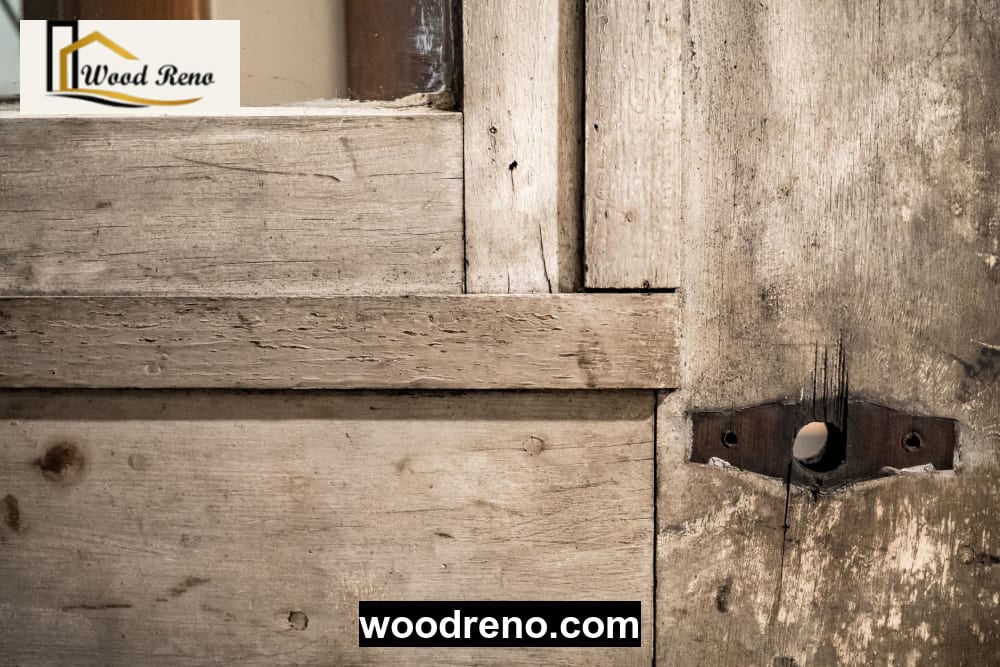
The main price drivers in a complete quotation
| Factor | Why it changes cost | What to check |
|---|---|---|
| Shutter | Construction controls timber quantity, labour and weight | Solid, panelled or flush; finished thickness |
| Timber or core | Species, seasoning and board quality vary | Identity, core, visible facing and jointing |
| Chokhat | Section and wall depth affect material volume | Material, dimensions, threshold and architraves |
| Hardware and fitting | Load capacity and installation scope differ | Brands, models, quantities and labour |
| Finish | Preparation and coat system determine labour | Stain, sealer, coating, coat count and location |
The difference between a shutter price and an installed door price
A shutter price commonly excludes the frame, lock, handles, hinges, stopper, polish, transport and installation. Old-door removal, damaged plaster, masonry correction, glass, carving and architraves may also be extra.
Compare the opening size and the finished shutter size separately. Record the shutter thickness, jamb depth, single- or double-leaf arrangement, swing direction and whether the door opens inward or outward.
⚠️ Important
Market note: Timber and board rates move with local availability, import cycles and the rupee. Any dated online rate should be checked against current, itemised Islamabad or Rawalpindi supplier quotations.
Send this specification request
- Site-measured opening width, height and wall depth.
- Finished shutter width, height and thickness.
- Solid, stile-and-rail panelled or engineered flush construction.
- Timber species or core, visible facing and seasoning condition.
- Chokhat material and finished section dimensions.
- Hardware brands, models, quantities and finishes.
- Coating system, preparation and number of coats.
- Transport, fitting, adjustment and all exclusions.
How do timber type and shutter construction change the price?
Timber identity and shutter construction are separate decisions. A door sold under one species name might be made from continuous solid members, narrow jointed pieces, a timber frame with panels, or an engineered core covered by veneer.
Solid wood, panelled wood and flush doors are not the same product
A solid-timber shutter uses substantially more natural wood. It has physical depth, can often be repaired or refinished, and may suit a substantial entrance. Its weight, timber movement and demand for well-seasoned stock can also increase the frame and hinge specification.
A stile-and-rail door uses structural vertical and horizontal members around inset panels. Correctly made panels are allowed to move within their grooves rather than being rigidly trapped. Raised profiles, mouldings and additional joints add machining and finishing work.
A flush door usually places veneer, plywood or another facing over an engineered core and perimeter frame. It can be flatter and more economical for sheltered rooms, but the quotation must identify the core, lipping, facing and treatment of the top and bottom edges.
How to assess a deodar, kail, ash or mahogany quote
A deodar door price or kail wood door price in Pakistan tells you little without species verification and construction detail. Ask whether the members are continuous or finger-jointed, how defects are handled, what board widths are used and whether the timber was checked for moisture before machining.
The same test applies to an ash or mahogany door price in Pakistan. Names may be used loosely in the market, particularly for stains and veneers that imitate another timber. The invoice should distinguish the structural timber from the visible veneer or coloured finish.
Broadly, clear wide boards and long continuous members tend to cost more than narrow, knotty or jointed stock. Grain orientation, moisture condition and the percentage of unusable material also affect both price and stability.
When a decorative main door costs more than a bedroom door
An entrance door may need greater thickness, a stronger chokhat, heavier hinges, a more secure lock and weather-resistant detailing. Deep carving, raised panels and CNC work add machining time and create corners that require careful sanding and coating.
Weight is not proof of quality by itself. A heavy shutter hung on undersized hinges or a lightly fixed frame will sag, scrape the floor and pull screws from the timber.
What changes with door size and intended use?
Door size affects more than the shutter’s face area. Added width, height or thickness increases timber volume, frame material, finish area, machining, handling and the load carried by each hinge.
What changes in a 3 by 6 foot wooden-door quote?
A nominal 3 by 6 foot door is a useful comparison scenario, not an order size. The mason’s opening, finished frame rebate and required floor clearance determine the actual shutter dimensions. Measure after the relevant floor and wall build-ups are known.
The price of a 3 by 6 wooden door in Pakistan therefore depends on whether the figure covers a flush bedroom shutter, a panelled timber shutter or a complete fitted set. Thickness, chokhat, hardware and finish can change the installed total even when the nominal size is identical.
Why double wooden doors and main entrances cost differently
A double-leaf entrance needs two shutters, a wider frame and coordinated meeting stiles. It may also require flush bolts or tower bolts on the inactive leaf, a threshold, seals and careful alignment so the leaves meet without rattling.
The double door wooden door price in Pakistan also changes with leaf proportions. Two equal leaves are not the same build as one broad active leaf and one narrow inactive leaf. Sidelights and transoms should be measured and priced separately.
Before settling on panels, glass or a statement entrance, review these wooden door design ideas for Pakistani homes and convert the preferred design into a written specification.
Interior doors versus exterior-facing doors
A sheltered bedroom door has a less demanding job than a balcony or entrance door exposed to sun, wind-driven rain and large humidity changes. Kitchen doors also encounter heat, grease and frequent cleaning, while bathroom-adjacent doors face persistent moisture.
Do not assume every timber or veneered door suits a wet room. The core, edge sealing, frame base and ventilation all matter. For moisture-prone spaces, it can be useful to compare PVC and wooden doors for moisture-prone rooms before specifying timber by default.
How much do the chokhat, hardware, fitting and polish add?
There is no reliable universal percentage to add because each component can range from basic to substantial. Request separate totals for the chokhat, hardware, fitting and finish, then compare the same scope across suppliers.
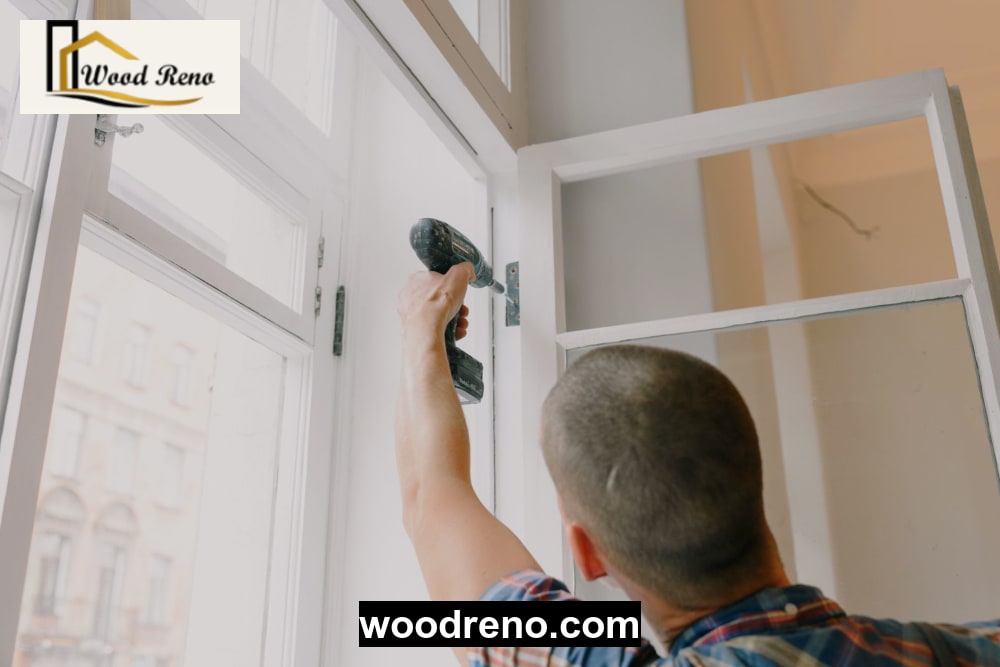
Why the chokhat can materially change the installed total
A chokhat is not simply a border around the shutter. Its material, head and jamb section, rebate, wall depth and threshold determine how it carries the leaf and meets the wall. Wide walls may require deeper jambs or separate extensions.
Architraves may be included on one side, both sides or not at all. Packing, anchors, foam or mortar interfaces, plaster repair and correction of an out-of-plumb opening should also be identified. A detailed explanation of door chokhat materials, sizes and fitting costs helps isolate this part of the quotation.
Hardware details that prevent surprise extras
Write down hinge count, hinge size and load suitability. Do the same for the mortise lock or latch, cylinder, handle set, tower bolts, closer, stopper, peephole and weather seals. “Accessories included” is not a usable specification.
Hardware compatibility matters. A surface handle does not replace a lock body and cylinder, while decorative hinges may not carry a wide solid shutter. Confirm whether cutting, mortising, screws, fitting and final adjustment are included.
Finish is a separate decision from door construction
Paint hides much of the grain and can provide a uniform colour. Stain with a clear coat retains visible grain, while melamine, lacquer, polyurethane and oil systems differ in appearance, application and maintenance. The label alone does not describe the full coating build.
Ask who performs sanding, whether stain matching is included, what sealer is used and how many finish coats are specified. Workshop finishing usually offers better dust control; site finishing may be necessary for final colour matching and touching up joints after installation.
For a closer breakdown of preparation and coating variables, use the separate wooden door polish cost guide. It should remain a distinct line from shutter construction and fitting.
How should complete wooden-door quotations be compared?
The comparison below prevents a low shutter-only offer from being set beside a complete installed door. Every cell should be resolved in writing rather than assumed from a showroom sample or messaging-app photograph.
How to compare wooden-door quotations before choosing on price
| Quote item | Options to compare | What must be specified | Main cost driver | Best-use consideration in Islamabad/Rawalpindi |
|---|---|---|---|---|
| Shutter construction | Solid, panelled, veneered flush | Internal build and thickness | Timber volume and labour | Match movement risk to exposure |
| Timber or core | Named timber or engineered core | Seasoning, jointing and visible facing | Material identity and usable yield | Moisture condition matters |
| Size and thickness | Single, nominal 3 by 6, oversized, double | Measured finished dimensions | Volume, weight and handling | Oversized leaves need stronger support |
| Frame or chokhat | Timber, engineered or specified alternative | Section, wall depth, threshold, trims | Material section and preparation | Base needs protection near wet floors |
| Design details | Plain, grooves, panels, carving, glass, louvers | Drawing, profiles and glass type | Machining and finishing time | Exterior details can hold water and dust |
| Hardware | Hinges, lock, handles, bolts, closer, seals | Brand, model, quantity and finish | Security and load rating | Weather seals suit exposed openings |
| Finish | Paint, clear coat, melamine, lacquer, PU, oil | Preparation and complete coat system | Labour and coating build | Schedule around heat, humidity and dust |
| Installation and exclusions | Fitting, removal, repairs, transport, adjustment | Included work and exclusions | Opening condition and site access | Allow for seasonal readjustment terms |
A seven-point comparison sequence
- Confirm site-measured opening and finished shutter size.
- Compare shutter construction and finished thickness.
- Verify timber or core, jointing and visible facing.
- Match the chokhat material, section and wall depth.
- Separate panels, carving, grooves, glass and louvers.
- Compare hardware by brand, model and quantity.
- Check finish, fitting, transport, adjustment and exclusions.
The lowest quote may simply omit the frame, polish or fitting. Before ordering, approve a site measurement, elevation or design reference and written project specification.
Homeowners requiring doors and frames for an Islamabad project can request a project-specific measured quotation from WoodReno. Materials and hardware are selected per the approved project specification, and service, delivery and installation are available in Islamabad only.
Which choices cope with Islamabad’s dry summer and monsoon?
No single species is automatically the best wood for every Islamabad door. A stable construction made from correctly identified, moisture-conscious timber can perform better than a costly species that was machined wet, stored badly or exposed without suitable detailing.
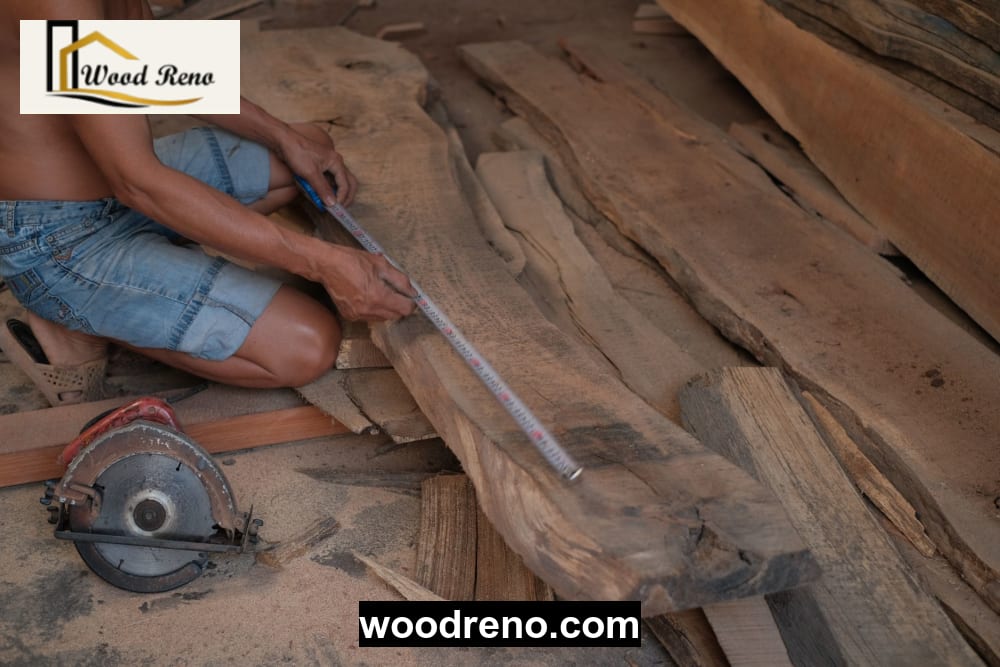
Why doors bind in monsoon and show gaps in summer
Wood exchanges moisture with the surrounding air. In the very dry 38–42°C May–June period, it can shrink across the grain and reveal panel or joint gaps. During July and August, humidity above 70% can cause swelling, tight margins and binding.
Acclimatisation, moisture checks, balanced construction and a straight frame reduce these problems. Edge allowances must suit the door, coating and exposure; there is no responsible universal clearance for every timber and opening.
💡 Tip
A door that binds only during monsoon should be inspected for hinge sag, frame movement and moisture entry before its edge is planed. Removing too much wood in August can leave an excessive gap in June.
How weather changes polish and paint results
Humid monsoon air can slow curing and contribute to a hazy or bloomed clear finish. Fresh coatings also hold dust more readily while tacky. Complete masonry cutting and heavy sanding before final coats, then isolate the curing door from active construction.
Hot, dry weather creates a different problem: water-based coatings can flash off before they level, while PVA adhesive can skin before parts are aligned and clamped. Cold, damp winter nights can slow oil-finish curing. The applicator should provide product-specific recoating, handling and cure instructions.
Questions to ask before approving an exterior door
- Will direct sun or wind-driven rain reach the shutter?
- How are the top, bottom, lock cut-outs and glazing rebates sealed?
- Does the design shed water, or do deep grooves retain it?
- Are the frame base and threshold protected from wet flooring?
- Which maintenance signs require recoating rather than repair?
- When can the finished leaf be handled, hung and put into service?
What mistakes make a cheap door expensive later?
- The mistake: accepting a species name as a full specification. It conceals whether the shutter is solid, jointed, veneered or built over a core. Record each layer and structural member.
- The mistake: ordering from the mason’s nominal opening. Floor build-up, plaster and an uneven reveal can alter the fitted size. Measure at the ordering stage.
- The mistake: leaving shutter thickness unwritten. Thickness affects rigidity, lock compatibility, rebate size and weight. State the finished thickness.
- The mistake: approving generic hardware. Undersized hinges allow sagging, and an unspecified lock may not match the handle or shutter. List models and quantities.
- The mistake: burying glass and carving in one total. This prevents meaningful comparisons and makes later design changes contentious. Price each feature separately.
- The mistake: applying final polish beside active masonry work. Dust settles into wet coatings and abrasive particles mark the finish. Complete dusty operations first.
- The mistake: trimming a swollen door without diagnosing it. Hinge movement, a twisted frame or water entering an unfinished edge may be the real cause. Correct that cause before removing timber.
When should a carpenter inspect the opening?
Arrange an inspection if the opening is visibly out of square, the floor level is unfinished, the old frame is loose, plaster is cracked around the anchors or the wall shows dampness. These conditions cannot be solved by changing the shutter size alone.
A professional should also assess a heavy or oversized entrance, paired leaves that do not meet evenly, locks that no longer align, repeated monsoon binding or veneer lifting at an edge. The inspection should identify whether the fault lies in the leaf, hinges, frame, wall or moisture exposure.
Site measurement is especially important before ordering glass, CNC work or a replacement shutter for an existing chokhat. Small errors can place the lock against an old mortise or leave the new leaf incompatible with the rebate.
What should you verify before placing the order?
The final check is short, but it prevents most quotation disputes. Keep the approved specification, drawing and hardware schedule with the signed quotation.
Before measurement
- Decide the room use, exposure and required opening direction.
- Confirm likely floor and wall finish thicknesses.
- Identify glass, ventilation, security and privacy requirements.
At measurement
- Record opening width and height at more than one point.
- Check wall depth, plumb, floor level and available swing.
- Confirm whether the old chokhat remains or is removed.
- Photograph dampness, cracked masonry and uneven reveals.
Before production
- Approve the shutter construction, thickness and timber or core.
- Approve the frame section and design drawing.
- List every hardware item by brand, model and quantity.
- Write down finish samples, coat system and exclusions.
At handover
- Open, close and latch the door without forcing it.
- Check even margins, hinge fixing and lock alignment.
- Inspect the top, bottom, edges and frame base.
- Record finish-care, handling and seasonal adjustment instructions.
Frequently Asked Questions
What is the price of a 3 by 6 wooden door in Pakistan?
There is no dependable single price for a nominal 3 by 6 foot door. The amount depends on actual finished dimensions, shutter thickness, solid, panelled or flush construction, timber or core, chokhat, hardware, finish and fitting. Compare current, itemised local quotations using the same specification.
What type of wood is best for doors in Pakistan?
The best choice depends on exposure, construction and timber condition rather than species alone. For Islamabad, ask for verified timber identity, suitable seasoning, sound jointing and a construction that accommodates seasonal movement. Exterior-facing doors also need protected edges, compatible finish and planned maintenance.
How much does a solid wood door cost in Pakistan?
A solid wood door price cannot be established from the species name or shutter size alone. Board quality, seasoning, member width, jointing, thickness, carving, frame capacity and hardware all change the total. Verify whether “solid” means continuous timber throughout or only a solid perimeter or visible facing.
What is the deodar door price in Pakistan?
Deodar prices vary with species identity, origin, moisture condition, clear-board yield and shutter construction. Ask the supplier to state whether the shutter uses continuous or jointed members, its finished thickness, the chokhat specification and every excluded item. Check the resulting quote against current local market offers.
How much do mahogany doors cost in Pakistan?
Mahogany quotations vary widely because the name may refer to structural timber, veneer, reproduction colour or a market trade name. Require written identification of the timber and visible facing, plus the shutter build, thickness, frame, hardware and finish. A colour sample alone does not verify the wood species.
What is included in a main door price in Islamabad?
A complete main-door quotation should identify the shutter, timber or core, chokhat, hinges, security lock, handle, bolts, stopper or closer, finish, transport, fitting and adjustment. Glass, carving, sidelights, threshold work, old-door removal and masonry repairs should be listed as included or excluded.
Talk to WoodReno About Your Project
Every project is quoted after measurement, so the figures above are general market guidance rather than a WoodReno price. Send your measurements and photographs and the team will come back with a project-specific quotation.
Shop #1, Plot #126, I&T Center, G-9/1, Islamabad 44002 · +92 334 9000098
Sources
Reviewed by Safdar Aslam for WoodReno.